
America's 250th Inspires New Effort to Preserve the Nation’s History Before It’s Lost
Society of American Archivists and Preservica Partner to Safeguard Many Historical Documents and Ensure Records Remain Accessible for Future Generations
CHICAGO and BOSTON, July 30, 2026 (GLOBE NEWSWIRE) -- In celebration of America’s 250th anniversary, The Society of American Archivists (SAA) launched “250 for the 250th,” a national initiative bringing together archival collections from across the United States and its territories to share archived documents, photographs, and audiovisual materials that tell the wide-ranging stories that shape our heritage.
The initiative invited archival repositories from all 50 states, Washington, DC, and the seven US territories to contribute one item from their collections representing an aspect of American history. Through these contributions, “250 for the 250th” highlights the diverse voices, communities, and experiences that make up the nation’s documentary heritage.
The collection is organized according to the following themes and categories: Unfinished Revolutions, Power of Place, We the People, American Experiment, and Doing History—highlighting local history, underrepresented voices, everyday life, civic engagement, and moments of change—with some documents dating back 250 years to 1776. These pieces of history, which form a collective portrait of the nation’s rich, multifaceted, and often complex history, together create a substantial and enduring archival resource that is now available to researchers, students, and the public. The project was developed by SAA’s America 250 Task Force, established in 2025, to explore how the archival profession could contribute to the semiquincentennial anniversary and bring the work of archives across the country to the forefront.
With support from industry partner Preservica, the SAA America 250 Task Force created “250 for the 250th” to showcase the depth and diversity of archival collections from repositories of all sizes, including archives, libraries, museums, government institutions, universities, and cultural organizations.
Since the initiative launched, hundreds of submissions have been shared, representing a wide range of historical experiences—from local community milestones and personal correspondence to records documenting social movements, civic engagement, and cultural change. A few of the fascinating submissions include:
- The Hoover Dam, under construction (1934). Source: University of Nevada, Las Vegas, Special Collections and Archives. See photo here.
- Mug shot and fingerprints from notorious outlaw Clyde Barrow (1928). Source: Dallas Municipal Archives – See document here.
- Handwritten first summary of the genetic code (1965) from Nobel Prize-winning biochemist Marshall W. Nirenberg. Source: National Library of Medicine, Bethesda, MD – See document here.
- The constitution and by-laws of the Free African Civilization Society of Baltimore (1834). Source: University of Maryland, Baltimore. See document here.
-
Becoming American Citizens at Thomas Jefferson’s Monticello (1992). Source: Thomas Jefferson Foundation Photograph Collection. See photo here.
Highlights from the collection are also showcased in this video:
“Safeguarding America’s Many Histories.”
“Archives preserve more than historical records; they preserve the voices, experiences, and perspectives that help communities understand their past and shape their future,” said Sarah Quigley, Chair of the SAA America 250 Task Force. “Through ‘250 for the 250th,’ we celebrate the work archivists do every day to ensure these stories remain accessible for generations to come. SAA hopes to inspire discussions—including difficult ones—about our nation’s history, our values, and our shared future.”
The initiative demonstrates how history is preserved not only through nationally recognized collections, but also through the everyday records that capture the experiences of individuals and communities. Stories shared through “250 for the 250th” include materials highlighting:
- Local histories and community experiences — showing how communities across the country have contributed to America’s evolving story.
- Advocacy, protest, and civic engagement — preserving the voices of individuals and groups who have shaped social change.
-
Letters, journals, photographs, and personal papers — providing firsthand perspectives on everyday life and connecting future generations with the experiences of those who came before.
“Digital Preservation technology plays a critical role in safeguarding America’s most important historical artifacts and ensuring that records remain accessible for future generations,” said Mike Quinn, CEO of Preservica. “We are proud to support SAA and the archival community in creating new opportunities for people to discover and engage with the stories preserved in archives.”
As America’s 250th anniversary celebrations continue, “250 for the 250th” serves as a reminder of the essential role archivists play in preserving and sharing the records that connect communities to their past. The initiative celebrates the collections, institutions, and professionals dedicated to protecting America’s documentary heritage for generations to come.
Explore the growing collection of stories from archives across America at www.tinyurl.com/SAA250.
Frequently Asked Questions (FAQ):
Q: Why is it important to digitally preserve this historical information?
A: As the United States celebrates its 250th anniversary, it’s critical to be able to tell our country’s story with artifacts that represent the history of all people in our society. At Preservica, our vision is a world where the potential of our digital memory is harnessed to enrich and protect our cultural, social, business, and political lives through Digital Preservation. The “250 for the 250th” initiative by the Society of American Archivists (SAA) embodies this vision.
Q: What is Digital Preservation?
A: Digital Preservation is all about making sure you can always quickly find, view, use, and trust your digital content and records over decades—or forever. This means going beyond simply storing your files to making sure they are maintained in a file format that you can instantly view and use no matter what application they were originally created in. Preservica is a market leader in Active Digital Preservation™ and the most trusted Digital Preservation platform on the market.
Q: How does Digital Preservation help protect the world’s cultural, social, business, and political memory?
A: Preservica is changing the way thousands of organizations around the world protect and reuse long-term digital information. Our unique Active Digital Preservation™ software automatically keeps every file alive in future-friendly formats. Which means you can always quickly find and action the content you need for Freedom of Information (FOI) requests, compliance, cultural, brand value, and knowledge reuse.
About the Society of American Archivists
Founded in 1936, the Society of American Archivists (SAA) is North America’s oldest and largest national archival professional association. SAA supports archivists and archives through education, advocacy, and collaboration to ensure the preservation and use of records that document America’s history and cultural heritage.
Visit the “250 for the 250th” collection: www.tinyurl.com/SAA250.
About Preservica
Preservica is changing the way organizations around the world protect and reuse long-term digital information. Preservica's AI-powered Active Digital Preservation™ archiving software automatically keeps every file alive in future-friendly formats over decades to ensure high-value information can always be quickly found, trusted and actioned for FOI, regulatory compliance, legal, brand and AI needs.
Developed in collaboration with Microsoft, Preserve365® simplifies compliance and AI adoption by making the archiving, Digital Preservation and discovery of long-term and permanent records a seamless part of everyday Microsoft 365 and Microsoft SharePoint workflows. This embedded approach empowers Microsoft customers to maximize existing software investments such as Power Automate and Copilot to automate archiving, reduce cost and risk, simplify discovery, and build a foundation of trusted AI-ready long-term content.
Connect with Preservica:
Maria Doyle
Doyle Strategic Communications (for Preservica)
+1-781-964-3536
maria@doylestratcomm.com
Photos accompanying this announcement are available at
https://www.globenewswire.com/NewsRoom/AttachmentNg/ffb296ef-13b3-4387-bfb6-0279acb2e1de
https://www.globenewswire.com/NewsRoom/AttachmentNg/e07f4f5c-c56b-498e-983e-87d550e828b3
https://www.globenewswire.com/NewsRoom/AttachmentNg/aea4b242-5fb6-4368-8cf7-03892d5b263f
https://www.globenewswire.com/NewsRoom/AttachmentNg/d597d002-dabf-4ef2-96a0-bf8eeb9cc0c8
https://www.globenewswire.com/NewsRoom/AttachmentNg/f753f645-93f9-473c-a873-d2399dda7399
A video accompanying this announcement is available at
https://www.globenewswire.com/NewsRoom/AttachmentNg/36049f26-d3a6-44b8-8de6-6be0a6cf286e


Hoover Dam, under construction (1934)
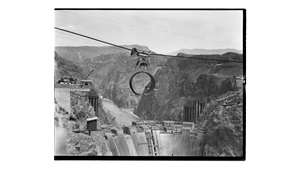
Hoover Dam (formerly Boulder Dam), under construction in 1934. The black-and-white image depicts an enormous pipe being moved from one side of the canyon to the other. A man, barely visible in the image, kneels inside the pipe. The dam itself is visible at the bottom of the frame, surrounded by the walls of Black Canyon. See full details at: https://td52e01bc4f4b6253.starter1ua.preservica.com/portal/en-US/asset/sdb:IO%7Cee0783b8-8801-4e28-8a87-b48deae0f5ea?keyword=Hoover
Fingerprints from notorious outlaw Clyde Barrow (1928)
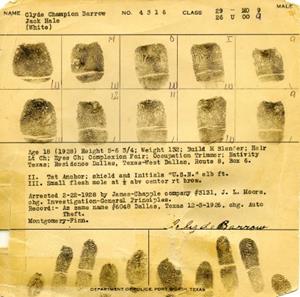
Signed fingerprint card from the Fort Worth Police Department. Dallas Police Department Historic Cases Collection 91-019, Dallas Municipal Archives. This is the earliest mugshot of Clyde Barrow (as a teenager), as well as one of the few authenticated signatures by Barrow.See full details at: https://td52e01bc4f4b6253.starter1ua.preservica.com/portal/en-US/asset/sdb%3AIO%7Ceebb394c-bd6c-4f6a-ba37-0e0e1bb44b51?keyword=Clyde&keyword=Barrow
Handwritten first summary of the genetic code (1965) from Nobel Prize-winning biochemist Marshall W. Nirenberg
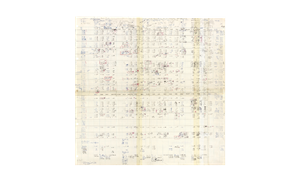
Marshall W. Nirenberg (1927-2010) was an American biochemist who shared the 1968 Nobel Prize in Physiology or Medicine for deciphering the genetic code. Beginning in the late 1950s at the National Institutes of Health in Bethesda, Maryland, Nirenberg conducted a series of groundbreaking experiments on the chemistry of DNA. By 1966, he and his laboratory staff had figured out how the nucleotide units of RNA direct ribosomes to assemble amino acids into proteins, thereby “cracking” the genetic code of organic life. This chart is the first summary of the genetic code, created by Marshall Nirenberg on January 18, 1965, when more than half of the code had been deciphered. See full details at: https://td52e01bc4f4b6253.starter1ua.preservica.com/portal/en-US/asset/sdb%3AIO%7C4536c37f-5558-43f1-8b18-0b37eeba8b9d?keyword=Marshall&keyword=Nirenberg
The constitution and by-laws of the Free African Civilization Society of Baltimore (1834)

This pamphlet was distributed to members of the Free African Civilization Society of Baltimore, a Black benevolent society that was a source of monetary, spiritual, and community support for free and formerly enslaved Black men in the late 18th through the mid 19th centuries. The Free African Civilization Society of Baltimore had explicit membership requirements and provided monetary support for members at times of illness and to their family if the member died. This early example of mutual aid demonstrated the importance and power of community support for Black residents of Baltimore in the 1800s. This item held by UMBC was owned by Washington Perkins, a Black grocer born in 1810.See full details here: https://td52e01bc4f4b6253.starter1ua.preservica.com/portal/en-US/asset/sdb%3AIO%7Cf8574dd9-dfbd-4879-82b6-89809e78c68b?keyword=baltimore
Becoming American Citizens at Thomas Jefferson’s Monticello (1992)

New American citizens taking the Oath of Citizenship on Independence Day on the steps of Monticello. The naturalization ceremony was part of the Independence Day celebrations at Monticello, the home of Thomas Jefferson (1746-1826), author of the Declaration of Independence. In 1992, the new citizens came from over twenty-five countries across five continents. The scaffolding in the background points to roof restoration work in 1992, part of the ongoing work of preserving this historic site. Monticello the only presidential home in the United States designated as a UNESCO World Heritage site.See full details here: https://td52e01bc4f4b6253.starter1ua.preservica.com/portal/en-US/asset/sdb%3AIO%7C4729ebf8-9606-4acf-ae3e-b68894a67448
Legal Disclaimer:
EIN Presswire provides this news content "as is" without warranty of any kind. We do not accept any responsibility or liability for the accuracy, content, images, videos, licenses, completeness, legality, or reliability of the information contained in this article. If you have any complaints or copyright issues related to this article, kindly contact the author above.
